

Writing desk terminology includes writing desk, secretary desk, bureau, and escritoire, each describing a compact desk form between 76 and 107 cm wide with shallow 5 to 8 cm drawers, designed for handwriting, light laptop use, and minimal storage in small home office spaces.
Most confusion around writing desks comes from naming, not design.
Retailers, antique dealers, and regional markets all use slightly different terms for what are often very similar pieces. Understanding these terms prevents buying a desk that does not fit your space or your intended use.
What is a writing desk called in furniture terminology?
Writing desk terminology = naming system → identifies desk type → includes writing desk, secretary, bureau, escritoire, and writing table, each linked to specific features such as fold-down surfaces, enclosed compartments, or minimal drawer storage.
The simplest term is “writing desk.” This refers to a compact desk with a flat surface and minimal storage, usually one or two shallow drawers.
A “writing table” is even simpler. This version often has no drawers or only a single slim drawer, making it ideal for modern interiors where clean lines matter more than storage.
A “secretary desk” includes a hinged front panel that folds down to create a writing surface. Inside, small compartments organise letters and stationery.
A “bureau” in UK terminology describes a chest of drawers with a slanted fall-front writing surface. This design combines storage and workspace in a vertical format.
An “escritoire” is a more formal term, typically used for antique or high-end versions of secretary desks, often made from premium hardwoods with detailed craftsmanship.
According to the Wikipedia page on desks, historical desk forms evolved based on writing needs and storage requirements, which explains why multiple terms still exist today.
What is the difference between a writing desk and a standard desk?
Writing desk = compact desk → 76 to 107 cm width → minimal storage with 1 to 2 shallow drawers, whereas standard desk = larger workstation → 137 to 152 cm width → multiple deep drawers and technology-focused features.
The size difference defines the purpose.
A writing desk supports light tasks such as handwriting, journaling, or laptop use. The surface depth typically ranges from 46 to 61 cm, which keeps the footprint small.
A standard office desk supports full work setups. These desks often include cable management, filing drawers, and widths exceeding 140 cm.
The UK Health and Safety Executive outlines workstation requirements for prolonged computer use, which explains why office desks are larger and more complex.
In contrast, writing desks prioritise simplicity and proportion over functionality.
Why are there so many names for writing desks?
Writing desk naming variation = regional terminology → UK, US, and European differences → results in multiple terms describing similar desk structures with slight design variations and historical influences.
Regional language differences create most of the confusion.
In the UK, “bureau” refers to a fall-front writing desk. In the US, “bureau” often means a chest of drawers. Meanwhile, “secretary desk” is widely used in American listings for fold-down designs.
French influence introduces terms like “escritoire” and “bonheur du jour,” both describing elegant, compact writing desks with decorative features.
Furniture naming also reflects historical usage. Desks were originally designed for handwritten correspondence, not computers, which is why storage compartments are small and specialised.
According to the Wikipedia page on furniture, traditional furniture categories often persist even as their original use evolves, leading to overlapping terminology in modern markets.
What features define each type of writing desk?
Writing desk types = design features → determine function → include flat surface tables, fold-down secretary desks, slanted bureau desks, and enclosed escritoires with compartment storage.
Each variation serves a slightly different purpose.
A writing table focuses on minimalism. It works best in small rooms or decorative spaces where visual weight matters.
A secretary desk prioritises organisation. The fold-down panel reveals pigeonholes and compartments for documents and stationery.
A bureau combines vertical storage with a writing surface. This design suits smaller homes where furniture must serve multiple functions.
An escritoire emphasises craftsmanship and aesthetics. These pieces often use hardwoods such as oak or walnut and feature traditional joinery like dovetails.
Understanding these features helps match the desk to your actual usage rather than just its name.
How do you choose the right writing desk for your space?
Writing desk selection = decision process → match size, function, and storage → requires measuring available width, ensuring 60 to 90 cm clearance, and selecting desk type based on usage and room layout.
Start with measurements.
A writing desk between 90 and 110 cm wide suits most small home offices. Allow at least 60 cm clearance for chair movement, with 75 to 90 cm providing comfortable access.
Next, define the purpose.
Choose a writing table for light use and minimal storage. Select a secretary or bureau if you need concealed compartments or additional organisation.
Material also matters. Solid wood desks typically last 10 to 20 years or more with proper care, while engineered wood options offer lower upfront cost but shorter lifespan.
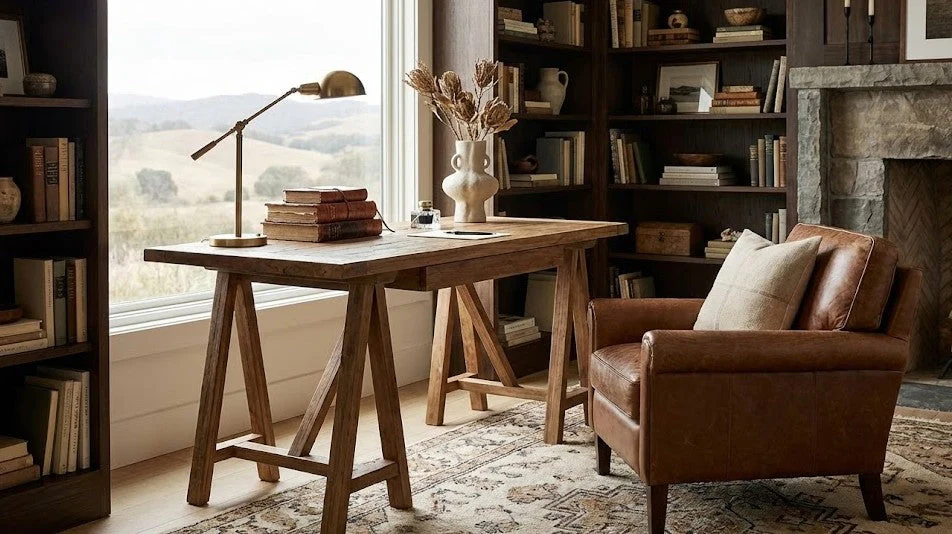
For a broader look at how writing desks are defined, structured, and used across different styles and regions, this detailed guide on what a writing desk is called breaks down terminology alongside practical buying considerations. The explanation connects naming directly to real-world features such as drawer depth, desk width, and fold-down clearance requirements, which helps avoid buying a desk that does not fit your room or your workflow.
Writing Desk Selection Checklist
Use this framework to avoid common buying mistakes:
Measure total available space before browsing desks
Confirm intended use, writing, laptop, or full workstation
Choose desk type based on storage needs, minimal or enclosed
Check desk width between 76 and 107 cm for compact spaces
Verify clearance requirements, especially for fold-down desks
Inspect materials, solid wood offers longer lifespan than MDF
Test drawer construction, dovetail joints indicate durability
Match style and finish to existing room furniture
What is a writing desk called and why does it matter?
Writing desk terminology = classification system → links name to function → ensures correct desk selection based on size, storage, and structural design.
The name directly affects what you buy.
A “writing desk” gives flexibility but requires checking specifications. A “secretary” signals a fold-down mechanism. A “bureau” indicates vertical storage. An “escritoire” suggests premium craftsmanship.
Understanding these distinctions prevents costly mistakes and ensures your desk fits both your space and your needs.
The best writing desk is not defined by its name.
It is defined by how accurately it matches your space, your workflow, and your expectations of quality.