

Blockchain technology is revolutionizing how we handle digital information, offering a secure and transparent way to record transactions. Far more than just the backbone of cryptocurrencies, blockchain is a distributed ledger system that promises enhanced security, efficiency, and trust across various industries. This guide will explain its core concepts, explore its wide-ranging uses, highlight its significant benefits, and provide compelling real-world examples.
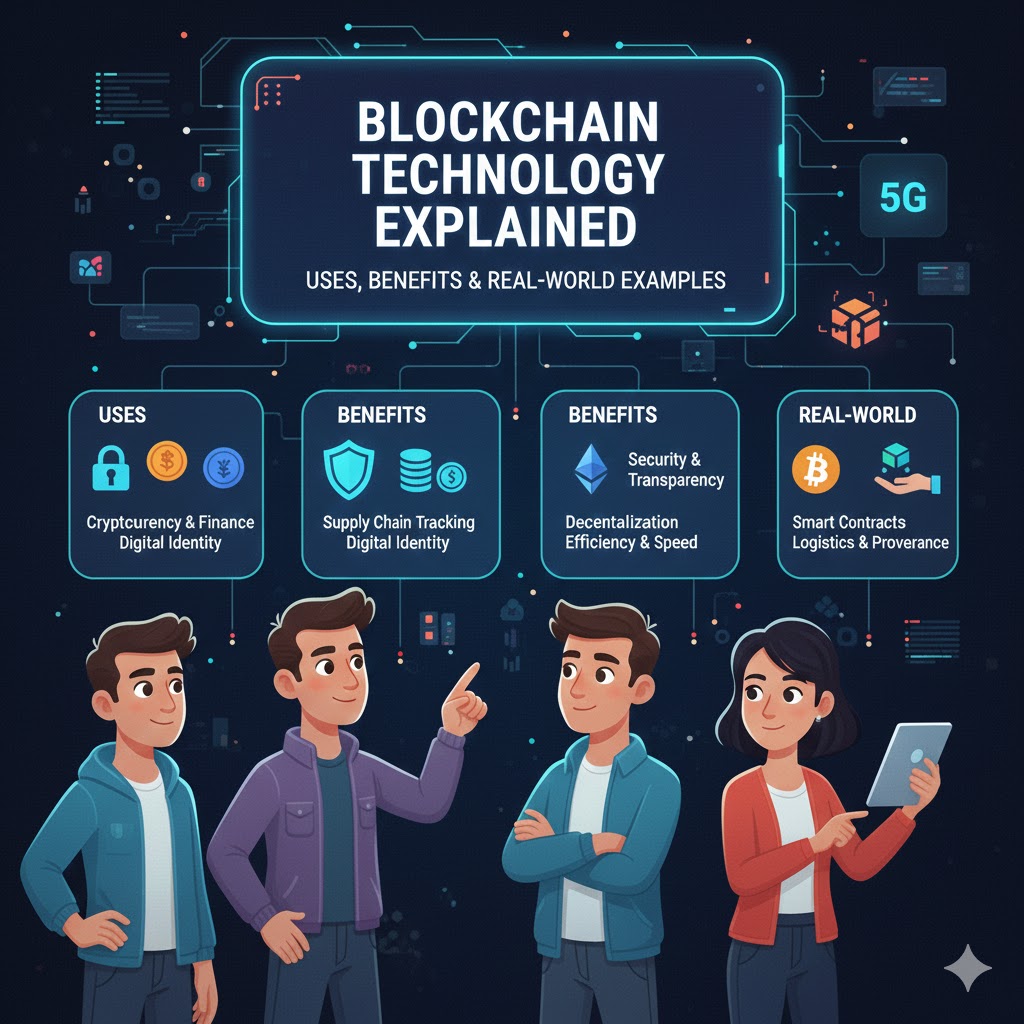
What is Blockchain Technology?
At its core, blockchain technology is a decentralized, distributed, and immutable ledger. It records transactions across many computers, ensuring that once data is added, it cannot be altered or removed. Each “block” contains a list of transactions, and once filled, it’s linked to the previous block, forming a secure “chain.”
This distributed nature means no single entity controls the network, making it highly resistant to tampering or censorship. Participants each hold a copy of the ledger, and any new transaction must be validated by the network before being added to a new block.
The cryptographic principles used ensure data integrity and user privacy. This innovative structure is why blockchain is considered a foundational technology, offering unprecedented levels of security and transparency compared to traditional centralized systems.
Key Blockchain Technology Benefits
One of the primary benefits of blockchain technology is its enhanced security. The cryptographic linking of blocks and the distributed nature of the ledger make it extremely difficult for malicious actors to compromise data. Any attempt to alter a record would require changing every subsequent block across the entire network, which is practically impossible.
Another significant benefit is transparency and immutability. All confirmed transactions are publicly visible (though often anonymized) and permanently recorded. This creates a trustworthy, auditable trail that can reduce disputes and increase accountability among participants.
Furthermore, blockchain can lead to increased efficiency by eliminating intermediaries and streamlining processes. Transactions can be executed faster and often at lower costs, as there’s no need for central authorities to verify or reconcile data. This automation and direct interaction enhance trust and operational speed.
- Enhanced security through cryptography
- Immutable and transparent records
- Reduced need for intermediaries
- Faster transaction processing
- Increased trust and accountability
Practical Blockchain Technology Uses
Blockchain technology has practical uses far beyond just digital currencies like Bitcoin. In supply chain management, it provides end-to-end transparency, allowing companies and consumers to track products from origin to destination, ensuring authenticity and ethical sourcing. This helps combat counterfeiting and verifies product provenance.
Another crucial application is in financial services. Blockchain enables faster, cheaper cross-border payments and enhances record-keeping for various assets. It can simplify clearing and settlement processes, reducing operational costs and risks for banks and financial institutions.
Healthcare is also exploring blockchain for secure patient record management. It can facilitate secure sharing of medical data among providers while maintaining patient privacy and ensuring data integrity. This makes health information more accessible to authorized parties and harder for unauthorized access.
Real-World Blockchain Examples Today
In the real world, blockchain is already making a significant impact. IBM Food Trust utilizes blockchain to track food products, helping quickly identify sources of contamination during outbreaks and ensuring food safety. Walmart, for instance, uses it to trace its leafy green vegetables, reducing the time needed to identify contaminated items from days to seconds.
Governments are also exploring blockchain. The Republic of Georgia uses it to register land titles, creating an unchangeable record of property ownership, which enhances security and reduces fraud. Estonia, a pioneer in digital governance, uses blockchain for various e-services, securing citizen data and official records.
Within entertainment, platforms like Dapper Labs’ NBA Top Shot use blockchain to create unique, verifiable digital collectibles (NFTs) for sports fans. This allows fans to truly own and trade unique digital moments, demonstrating a new paradigm for digital ownership and monetization of content.
The Future of Blockchain Explained
The future of blockchain technology holds immense promise for continued innovation and widespread adoption. We can expect to see further integration into identity management, creating self-sovereign digital identities that give individuals more control over their personal data. Smart contracts, self-executing agreements stored on the blockchain, will automate more legal and business processes, reducing disputes and administrative overhead.
As the technology matures, it will likely drive new decentralized applications (dApps) in various sectors, from gaming to logistics. The focus will shift towards improving scalability and interoperability between different blockchain networks. This evolution promises a more connected, secure, and efficient digital infrastructure globally.
FAQs About Blockchain
Q: Is blockchain only for cryptocurrency? A: No, while blockchain powers cryptocurrencies, its underlying technology has applications across many industries like supply chain, healthcare, and finance.
Q: Is blockchain truly secure? A: Yes, its decentralized nature and cryptographic principles make it highly secure and resistant to data manipulation once information is recorded.
Q: What is a “block” in blockchain? A: A block is a record of new transactions that, once completed, is added to the chain of previous blocks in a permanent and unchangeable way.
Blockchain technology stands as a transformative force, moving beyond its cryptocurrency origins to reshape industries worldwide. Its core principles of decentralization, immutability, and transparency offer unparalleled benefits in security and efficiency. As the technology continues to evolve, its real-world uses and applications are poised to expand, driving innovation and building a more trustworthy digital future for everyone.