

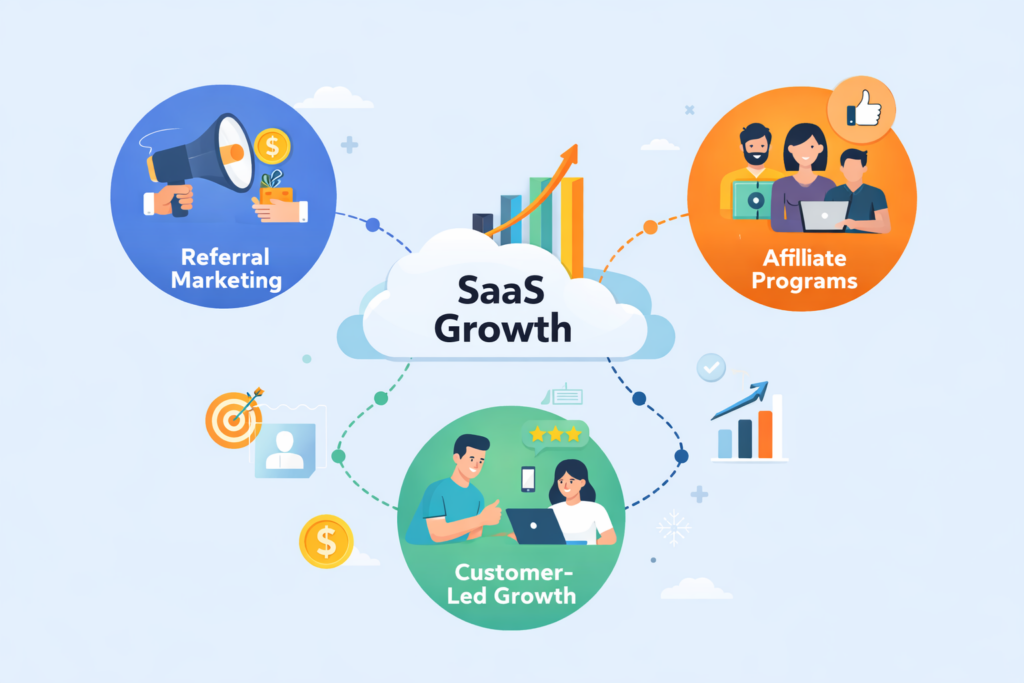
In the fast-evolving world of SaaS, growth is no longer just about building a great product—it’s about building systems that continuously attract, convert, and retain users. Traditional paid acquisition channels are becoming increasingly expensive, and competition is fiercer than ever. As a result, SaaS founders are turning toward more sustainable, compounding growth strategies such as referral marketing, affiliate programs, and customer-led growth.
These approaches not only reduce acquisition costs but also create a powerful feedback loop where satisfied users become your most effective marketers. In this article, we’ll explore how each of these strategies works, why they matter, and how SaaS businesses can implement them effectively.
The Shift Toward Sustainable SaaS Growth
Before diving into specific tactics, it’s important to understand why these strategies are gaining momentum. SaaS businesses thrive on recurring revenue, which means customer lifetime value (LTV) is a critical metric. High customer acquisition costs (CAC) can quickly eat into profits, especially for early-stage startups.
Referral marketing, affiliate programs, and customer-led growth offer a more scalable alternative because they:
- Leverage trust and social proof
- Reduce dependency on paid advertising
- Encourage organic growth loops
- Align incentives between users and the business
When executed well, these strategies can turn your existing customer base into a growth engine.
Referral Marketing: Turning Users into Advocates
Referral marketing is one of the most powerful tools in a SaaS company’s arsenal. It works on a simple principle: people trust recommendations from people they know. When your users refer others to your product, they’re essentially vouching for your brand.
Why Referral Marketing Works
- Higher conversion rates: Referred users are more likely to convert
- Lower acquisition costs: You reward only successful referrals
- Better retention: Referred customers often have higher engagement
Key Elements of a Successful Referral Program
- Clear Incentives
Offer rewards that are meaningful to your audience—discounts, credits, or premium features. - Seamless Experience
Make it easy for users to share referral links via email, social media, or direct messaging. - Timely Rewards
Deliver incentives quickly to maintain trust and motivation. - Tracking and Analytics
Monitor performance to optimize your program over time.
Example Approach
A SaaS tool might offer “Give $20, Get $20” credits for every successful referral. This creates a win-win situation for both the referrer and the new user.
Affiliate Programs: Scaling Through Partnerships
While referral marketing focuses on existing users, affiliate programs expand your reach by partnering with external promoters—bloggers, influencers, agencies, and content creators.
Affiliates promote your product to their audience and earn a commission for each successful conversion. This model allows SaaS companies to tap into new audiences without upfront advertising costs.
Benefits of Affiliate Marketing
- Performance-based spending: You pay only for results
- Expanded reach: Access to diverse audiences
- Scalability: Easily onboard multiple affiliates
Building an Effective Affiliate Program
- Attractive Commission Structure
Offer competitive commissions—recurring payouts are especially appealing in SaaS. - Marketing Resources
Provide affiliates with banners, email templates, and content ideas. - Transparent Tracking
Ensure accurate tracking of clicks, conversions, and payouts. - Strong Relationships
Engage with your affiliates regularly to keep them motivated.
Choosing the Right Tools
Managing an affiliate program manually can quickly become overwhelming. That’s where dedicated platforms come into play. For example, tools like Refgrow help SaaS founders launch and manage affiliate programs efficiently. By automating tracking, payouts, and onboarding, such platforms allow teams to focus on scaling partnerships rather than handling operational complexity.
Customer-Led Growth: Your Users as the Engine
Customer-led growth is a broader philosophy that encompasses both referrals and organic expansion within your user base. It focuses on delivering such a strong product experience that users naturally promote and expand usage.
Core Principles
- Product-first mindset: The product itself drives acquisition
- User empowerment: Customers become advocates
- Network effects: More users create more value
Strategies to Implement Customer-Led Growth
1. Build Shareable Features
Create features that naturally encourage sharing, such as:
- Collaboration tools
- Public dashboards
- Embeddable widgets
These features introduce your product to new users organically.
2. Encourage User-Generated Content
Happy customers often share their experiences through:
- Reviews
- Case studies
- Social media posts
Make it easy for them to do so by providing templates or incentives.
3. Optimize Onboarding
A smooth onboarding experience increases the likelihood that users will:
- Understand your product quickly
- Experience value early
- Recommend it to others
4. Leverage Community
Building a community around your product—through forums, Slack groups, or events—can amplify word-of-mouth growth.
Combining Strategies for Maximum Impact
While each strategy is powerful on its own, the real magic happens when they work together.
Example Growth Loop
- A user discovers your product through an affiliate
- They have a great experience and become a paying customer
- They refer colleagues through your referral program
- Some of those referrals become affiliates themselves
This creates a self-reinforcing cycle of growth.
Common Mistakes to Avoid
Even though these strategies are effective, there are pitfalls to watch out for:
1. Overcomplicating Incentives
If your reward structure is confusing, users won’t participate. Keep it simple and transparent.
2. Ignoring User Experience
No amount of marketing can compensate for a poor product. Growth strategies amplify what already exists.
3. Lack of Promotion
Simply launching a referral or affiliate program isn’t enough—you need to actively promote it within your product and marketing channels.
4. Poor Tracking Systems
Inaccurate tracking can lead to disputes and loss of trust among affiliates and users.
Measuring Success
To ensure your strategies are working, track key metrics such as:
- Referral rate: Percentage of users who refer others
- Conversion rate: How many referrals turn into customers
- Customer acquisition cost (CAC): Compare across channels
- Lifetime value (LTV): Measure long-term profitability
- Affiliate ROI: Revenue generated vs. commissions paid
Regular analysis helps you refine and optimize your approach.
The Future of SaaS Growth
As the SaaS landscape continues to evolve, companies that rely solely on paid acquisition will struggle to maintain profitability. The future belongs to businesses that can harness the power of their users and partners.
Referral marketing, affiliate programs, and customer-led growth are not just trends—they are foundational strategies for building resilient, scalable SaaS companies. By investing in these approaches, founders can create growth systems that compound over time.
Final Thoughts
SaaS growth is no longer about quick wins—it’s about building sustainable engines that drive long-term success. Referral marketing turns your users into advocates, affiliate programs extend your reach through partnerships, and customer-led growth ensures your product becomes its own best marketing tool.
When combined thoughtfully, these strategies create a powerful ecosystem where every satisfied customer contributes to your expansion. For SaaS founders looking to scale efficiently, now is the time to embrace these approaches and build growth systems that work for you around the clock.
FAQs
1. What is the most effective growth strategy for SaaS companies?
The most effective growth strategy for SaaS companies is a combination of referral marketing, affiliate programs, and customer-led growth. These approaches leverage existing users and partners to drive new customer acquisition while keeping costs low and scalability high.
2. How does referral marketing benefit SaaS businesses?
Referral marketing helps SaaS businesses acquire high-quality users at a lower cost. Since referrals come from trusted sources, they tend to have higher conversion rates, better engagement, and longer retention compared to users acquired through paid channels.
3. What is the difference between referral programs and affiliate programs?
Referral programs are typically designed for existing customers who recommend the product to others, often in exchange for rewards. Affiliate programs, on the other hand, involve external partners like bloggers or influencers who promote the product and earn commissions for each successful conversion.
4. How can SaaS startups launch an affiliate program easily?
SaaS startups can launch affiliate programs using dedicated tools that handle tracking, commissions, and partner management. Platforms like Refgrow simplify the process, allowing founders to set up and scale affiliate partnerships without complex technical work.
5. Why is customer-led growth important for SaaS success?
Customer-led growth is important because it turns satisfied users into advocates who promote the product organically. By focusing on delivering value and creating shareable experiences, SaaS companies can build sustainable growth loops that reduce reliance on paid marketing.