

Artificial Intelligence (AI) is no longer a futuristic concept but a driving force rapidly reshaping our world. By 2026, its influence will be even more profound, touching every facet of human existence from the workplace to our personal routines. This transformation promises both unprecedented opportunities and new challenges, fundamentally altering how we work, conduct business, and live our daily lives.
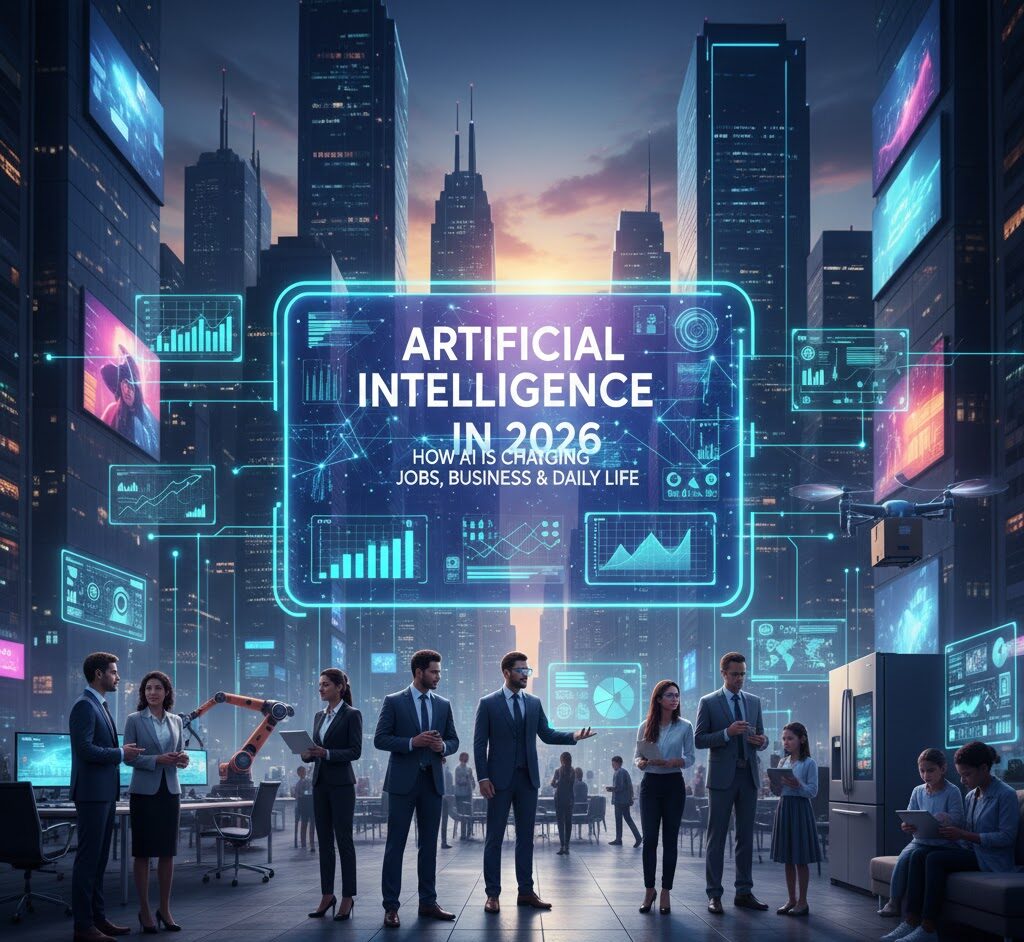
AI Changing Jobs in 2026
By 2026, Artificial Intelligence will have significantly reshaped the global job market. Automation, driven by advanced AI, will handle repetitive and data-intensive tasks across various industries, leading to increased efficiency and productivity.
While some roles may be augmented or even replaced, AI is also a catalyst for the creation of entirely new job categories. Experts in AI ethics, data governance, prompt engineering, and human-AI collaboration will be in high demand, requiring a significant reskilling of the workforce.
The focus for individuals will shift towards uniquely human skills such as critical thinking, creativity, emotional intelligence, and complex problem-solving. Lifelong learning and adaptability will be crucial for navigating this evolving landscape of AI and jobs.
Business Evolves with AI 2026
The business world in 2026 will be deeply intertwined with Artificial Intelligence. Companies will leverage AI for everything from predictive analytics and personalized customer experiences to optimizing supply chains and automating complex operational processes.
AI-driven insights will empower businesses to make faster, more informed decisions, leading to competitive advantages and new market opportunities. This will democratize advanced analytical capabilities, allowing even smaller enterprises to compete on a global scale.
Innovation will accelerate as AI assists in research and development, streamlines product design, and creates novel services. Businesses that strategically integrate AI into their core operations will be the ones that thrive and lead the market by 2026.
Daily Life Embraces AI
Artificial Intelligence will be seamlessly integrated into our daily lives by 2026, enhancing convenience and efficiency in countless ways. Smart homes will become more intuitive, with AI anticipating needs and managing energy, security, and entertainment effortlessly.
Personalized AI assistants will move beyond simple voice commands, proactively helping with scheduling, health monitoring, and even learning our preferences to offer tailored recommendations. Healthcare will see advancements with AI assisting in diagnostics, personalized treatment plans, and elder care.
Transportation will also evolve, with smarter traffic management systems and increasingly autonomous vehicles making commutes safer and more efficient. AI will enrich our experiences, making daily routines smoother and more connected than ever before.
Artificial Intelligence Reshapes Industries
Across sectors, Artificial Intelligence is set to fundamentally reshape entire industries by 2026. Manufacturing will embrace AI for predictive maintenance, quality control, and robotic automation, creating smarter factories and boosting output.
In finance, AI will revolutionize fraud detection, algorithmic trading, and personalized financial advice, leading to more secure and efficient markets. Retail will leverage AI for hyper-personalization, inventory management, and immersive shopping experiences, both online and in physical stores.
The healthcare industry will see AI drive breakthroughs in drug discovery, diagnostic imaging, and precision medicine, offering more effective treatments and better patient outcomes. AI’s pervasive reach will redefine operational standards and foster unprecedented innovation in every major economic sector.
How AI Changes Our World
By 2026, Artificial Intelligence will have fundamentally changed the way societies operate, interact, and innovate. Its transformative power will extend beyond individual sectors, fostering a more interconnected and data-driven global ecosystem.
Ethical considerations surrounding AI will be paramount, leading to new regulations and frameworks designed to ensure fairness, transparency, and accountability. Society will grapple with questions of privacy, bias, and the responsible deployment of increasingly sophisticated AI systems.
Ultimately, AI in 2026 is poised to empower humanity with enhanced capabilities, solving complex problems and opening doors to previously unimaginable possibilities. Understanding its nuances and steering its development responsibly will be key to harnessing its full potential for a better world.
FAQs about AI in 2026
Q: What jobs will AI replace by 2026?
A: AI will primarily automate repetitive, data-heavy, and predictable tasks, potentially impacting roles in administration, manufacturing, and some customer service. However, it will also augment many jobs and create new ones.
Q: How can businesses prepare for AI by 2026?
A: Businesses should invest in AI literacy for their teams, identify processes suitable for AI integration, focus on data quality, and develop strategies for human-AI collaboration. Embracing a culture of continuous learning is also crucial.
Q: Will AI make daily life more complex or simpler?
A: AI aims to simplify daily life by automating mundane tasks and offering personalized assistance in areas like smart homes, healthcare, and transportation. While initial adoption may involve a learning curve, the long-term goal is enhanced convenience and efficiency.
Artificial Intelligence in 2026 signifies a pivotal moment in technological advancement. Its pervasive presence will undoubtedly reshape jobs, catalyze business evolution, and integrate seamlessly into our daily routines. Embracing this transformative era requires adaptability, a focus on new skill development, and a commitment to ethical AI deployment. As we navigate this AI-driven future, understanding and harnessing its potential will be key to unlocking unprecedented progress and innovation across our world.