

Welcome to the exciting world of the stock market! For many beginners in India, the idea of investing can seem daunting, but with the right knowledge and a cautious approach, it’s a powerful way to grow your wealth. This guide will walk you through how to start investing safely in India, covering essential steps and strategies to help you navigate the market with confidence and make informed decisions.
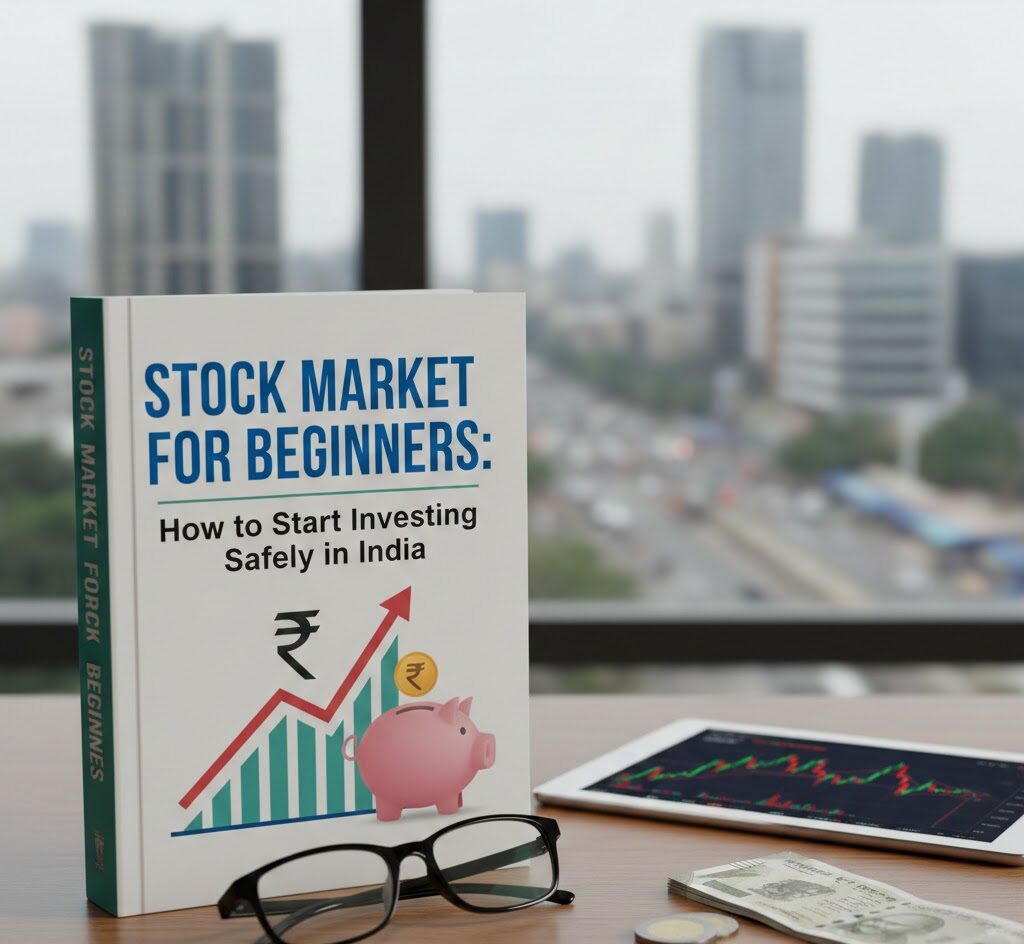
Stock Market for Beginners India
Understanding the Indian stock market is the first crucial step for any beginner investor. At its core, the stock market is a platform where shares of publicly listed companies are bought and sold. When you buy a company’s stock, you become a part-owner, and your investment’s value fluctuates based on the company’s performance and broader market sentiment.
India’s stock market is primarily regulated by SEBI (Securities and Exchange Board of India) and operates through exchanges like the National Stock Exchange (NSE) and the Bombay Stock Exchange (BSE). Investing allows you to participate in India’s economic growth, potentially earning returns through capital appreciation (when stock prices rise) or dividends (a share of company profits).
For beginners, knowing why to invest is as important as knowing how. It’s about achieving financial goals, whether it’s retirement planning, buying a house, or simply wealth creation. Starting early, even with small amounts, can leverage the power of compounding over time.
- **Equity Shares:** Represent ownership in a company, offering potential for high returns but also higher risk.
- **Mutual Funds:** Managed by professionals, these funds pool money from various investors to invest in a diversified portfolio of stocks or other securities. Ideal for beginners as they offer diversification and expert management.
- **Exchange Traded Funds (ETFs):** Similar to mutual funds but trade like stocks on an exchange, often tracking an index like Nifty 50 or Sensex. They offer diversification at a lower cost.
- **Bonds:** Debt instruments where you lend money to a government or corporation, receiving regular interest payments. Generally lower risk than stocks.
How to Start Investing Safely
Starting your investment journey in the stock market safely requires a few fundamental steps. First and foremost, you need a Demat account and a Trading account. A Demat account holds your shares electronically, similar to a bank account for money, while a Trading account is used to place buy and sell orders on the stock exchange. Both are usually opened together with a single broker.
Choosing the right brokerage firm is critical. Look for a broker regulated by SEBI, with competitive fees, a user-friendly trading platform, and reliable customer support. Many brokers offer online account opening, making the process convenient. You will also need to complete your Know Your Customer (KYC) process, which involves submitting identity and address proofs, alongside your PAN card and bank account details.
Once your accounts are set up, fund your trading account with the amount you wish to invest. It’s crucial to start with capital you can afford to lose, as stock market investments carry inherent risks. Never invest money meant for essential expenses or emergencies.
- **Open a Demat & Trading Account:** Essential for holding shares and executing trades.
- **Complete KYC:** Mandatory verification using PAN, Aadhaar, and bank details.
- **Choose a Reputable Broker:** Research fees, platform features, and customer service.
- **Link Bank Account:** For seamless fund transfers to and from your trading account.
- **Set a Budget:** Determine how much you can comfortably invest without impacting your financial stability.
Investing Safely in India
The cornerstone of investing safely in India is risk management. One of the most effective strategies is diversification. Instead of putting all your money into one stock, spread your investments across different companies, sectors, and asset classes. This mitigates the impact if one particular investment performs poorly.
For beginners, focusing on blue-chip stocks can be a safer starting point. These are shares of large, well-established companies with a proven track record of stable earnings and consistent growth. While not entirely risk-free, they are generally less volatile than smaller, less-established companies. Additionally, consider investing in index funds or ETFs which automatically provide diversification across a broad market index.
Embrace a long-term investment horizon. The stock market can be volatile in the short term, but historically, it has generated positive returns over longer periods. Resist the urge to constantly check your portfolio or make impulsive decisions based on daily market fluctuations. Patience and discipline are key attributes for safe and successful investing.
- **Diversify Your Portfolio:** Spread investments across different stocks, sectors, and asset types.
- **Consider Blue-Chip Stocks:** Invest in financially sound, large-cap companies.
- **Explore Index Funds/ETFs:** Gain broad market exposure with lower risk and cost.
- **Invest for the Long Term:** Allow your investments time to grow and ride out market downturns.
- **Avoid Leveraged Trading:** Do not borrow money to invest, especially as a beginner.
Start Investing Safely Strategies
Adopting smart strategies is vital to start investing safely and achieve your financial goals. One highly recommended approach for beginners is Systematic Investment Plans (SIPs). With SIPs, you invest a fixed amount at regular intervals (e.g., monthly) into mutual funds. This strategy averages out your purchase cost over time, reducing the risk associated with market timing, known as rupee cost averaging.
Before investing, conduct basic research on the companies or funds you are considering. Understand their business model, financial health, and management quality. Don’t solely rely on tips or recommendations without your own due diligence. Focus on understanding the fundamentals rather than getting caught up in market noise.
Another crucial strategy is to set clear investment goals and time horizons. Are you saving for retirement in 20 years or a down payment in 5? Your goals will dictate the level of risk you can comfortably take and the types of investments that are suitable. Regularly review and rebalance your portfolio to ensure it aligns with your evolving goals and risk tolerance.
- **Systematic Investment Plans (SIPs):** Invest fixed amounts regularly to average costs and reduce market timing risk.
- **Fundamental Analysis Basics:** Understand a company’s financial health, management, and industry prospects.
- **Define Investment Goals:** Set clear, measurable objectives for your investments.
- **Continuous Learning:** Stay informed about market trends, economic news, and investment principles.
- **Avoid Emotional Decisions:** Base investment choices on research and strategy, not fear or greed.
Beginners Start Investing Safely
For beginners, cultivating a mindset of continuous learning and patience is paramount to start investing safely and successfully. The market will have its ups and downs, and not every investment will be a winner. Learn from both successes and failures, and always prioritize protecting your capital. Never invest based on FOMO (Fear Of Missing Out) or herd mentality.
Regularly review your portfolio, perhaps quarterly or annually, to ensure it still aligns with your financial goals and risk tolerance. As you gain more experience and knowledge, you might explore different investment avenues, but always proceed with caution and thorough understanding. Starting small and gradually increasing your investment as your confidence grows is a prudent approach.
Remember, financial literacy is an ongoing journey. Utilize reliable resources, read financial news, and consider taking basic investment courses. The more you educate yourself, the better equipped you will be to make sound investment decisions and avoid common pitfalls that can derail a beginner’s journey. Investing is a marathon, not a sprint, and a safe, steady approach yields the best results over time.
Frequently Asked Questions (FAQ)
Here are some common questions beginners have about the stock market in India:
- **Q1: What is the minimum amount to start investing in the Indian stock market?**
A1: There’s no fixed minimum. You can start with as little as the price of one share, which could be a few rupees for some penny stocks or a few hundred for established companies. Mutual funds often allow SIPs starting from ₹500 per month. - **Q2: Is it safe to invest in the stock market as a beginner?**
A2: Yes, if approached with caution, research, and a long-term perspective. Investing in quality companies, diversifying, and using SIPs can significantly reduce risks. It’s crucial to invest only what you can afford to lose. - **Q3: How do I choose the right stock to invest in?**
A3: For beginners, start with large-cap, blue-chip companies with a stable track record. Research their financials, industry position, and management. Alternatively, consider diversified options like index funds or large-cap mutual funds. - **Q4: What is the difference between investing and trading?**
A4: Investing typically involves buying stocks with a long-term outlook (months to years) to build wealth through capital appreciation and dividends. Trading involves frequent buying and selling (intraday, swing) to profit from short-term price movements, which is much riskier and generally not recommended for beginners. - **Q5: What are the main risks involved in stock market investing?**
A5: Key risks include market risk (prices fluctuate due to economic/political events), company-specific risk (poor performance of a single company), liquidity risk (difficulty selling shares), and inflation risk (returns not keeping pace with inflation). Diversification and long-term holding help manage these.
Embarking on your investment journey in the stock market can be a rewarding experience when approached thoughtfully. By understanding the basics, choosing reliable platforms, diversifying your portfolio, and committing to continuous learning, you can start investing safely in India and steadily build your wealth. Remember, patience, discipline, and a focus on long-term goals are your most valuable assets.