

The world of mobile app development is always evolving, moving at an incredible pace. For aspiring developers and beginners looking to make their mark, understanding future trends is crucial. Staying updated on key shifts in technology and user expectations for 2026 will give you a significant advantage. Let’s dive into the essential insights every beginner should know.
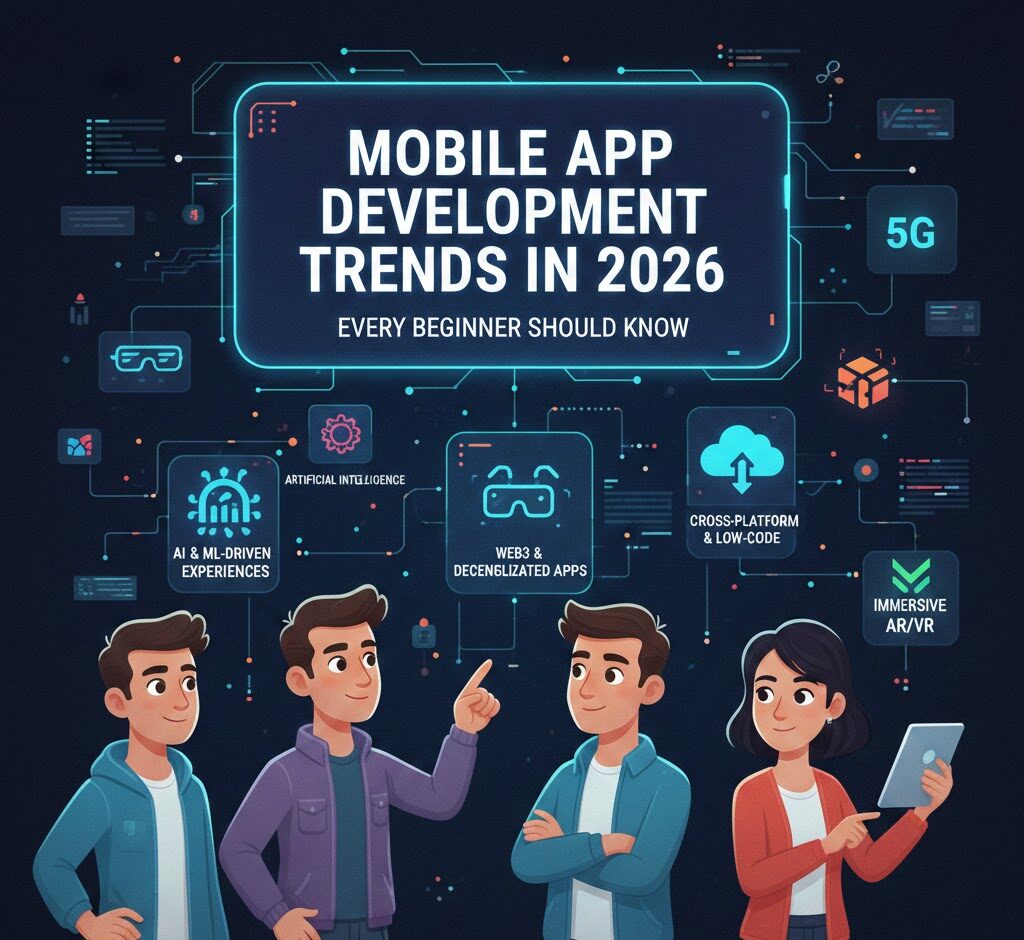
AI in Mobile App Development 2026
Artificial Intelligence (AI) will be foundational to mobile app development in 2026. Beginners should know that AI is no longer just for complex systems; it’s integrating into everyday apps for personalized experiences. Features like smart recommendations, natural language processing for chatbots, and predictive analytics will become standard.
Learning basic AI concepts or understanding how to integrate AI services will be a valuable skill. Focus on how AI can enhance user engagement and streamline app functionalities. This trend promises more intuitive and responsive applications.
- Personalized user experiences
- Enhanced in-app search capabilities
- Automated customer support via chatbots
Cross-Platform App Trends Beginner
Cross-platform development continues to be a major trend, especially for beginners. Tools like Flutter, React Native, and Xamarin allow developers to write code once and deploy it across both iOS and Android. This efficiency is vital when starting out, as it saves time and resources.
Understanding these frameworks will be a key skill for any mobile app development beginner in 2026. They enable broader reach without needing to master multiple native programming languages initially. This approach makes app creation more accessible.
Privacy for Every App Developer
Data privacy and security are paramount, and every app developer must prioritize them by 2026. Users are increasingly aware of their digital footprint, demanding transparency and control over their data. Implementing robust security measures and adhering to privacy regulations (like GDPR or CCPA) is non-negotiable.
Beginners should integrate privacy-by-design principles from the outset of their app development. This means thinking about data minimization, secure authentication, and clear user consent flows. A focus on trust builds a strong foundation for any app.
Wearable Tech App Development
The ecosystem of wearable technology is expanding beyond smartwatches to include augmented reality (AR) glasses and health trackers. Mobile app development in 2026 will increasingly involve creating companion apps or standalone experiences for these devices. Beginners should know this niche offers exciting opportunities.
Developing for wearables requires unique considerations, such as optimized battery usage, glanceable information, and intuitive voice commands. Learning to integrate with wearable APIs will open doors to innovative applications, especially in health, fitness, and communication.
Sustainable App Trends Beginners Know
Sustainability in tech is growing, and mobile app development is no exception. By 2026, beginners should know how to create “green” apps that minimize environmental impact. This involves optimizing code for energy efficiency, reducing server-side processing, and choosing eco-friendly hosting solutions.
User interfaces can also encourage sustainable behaviors, such as promoting public transport or tracking carbon footprints. Embracing these sustainable app trends is not just ethical, but also an increasingly valued feature by conscious users and businesses.
FAQ: Mobile App Development for Beginners
Q: What programming languages should I learn first for mobile app development?
A: For native development, Swift (iOS) and Kotlin (Android) are popular. For cross-platform, JavaScript (React Native) or Dart (Flutter) are great starting points. Focusing on one cross-platform framework is often best for beginners.
Q: How long does it take to learn mobile app development?
A: It varies, but with consistent effort, a beginner can grasp basic concepts and build simple apps within 6-12 months. Continuous learning is essential due to evolving mobile app development trends.
Q: Do I need a computer science degree to become a mobile app developer?
A: No, a degree is not strictly necessary. Many successful developers are self-taught or come from bootcamps. Practical skills, a strong portfolio, and understanding current trends like those for 2026 are more important.
Staying informed about mobile app development trends in 2026 is vital for every beginner entering this dynamic field. From integrating AI to building sustainable solutions, these insights provide a roadmap for your learning journey. Embrace continuous learning, experiment with new technologies, and remember that the future of mobile is in your hands.